
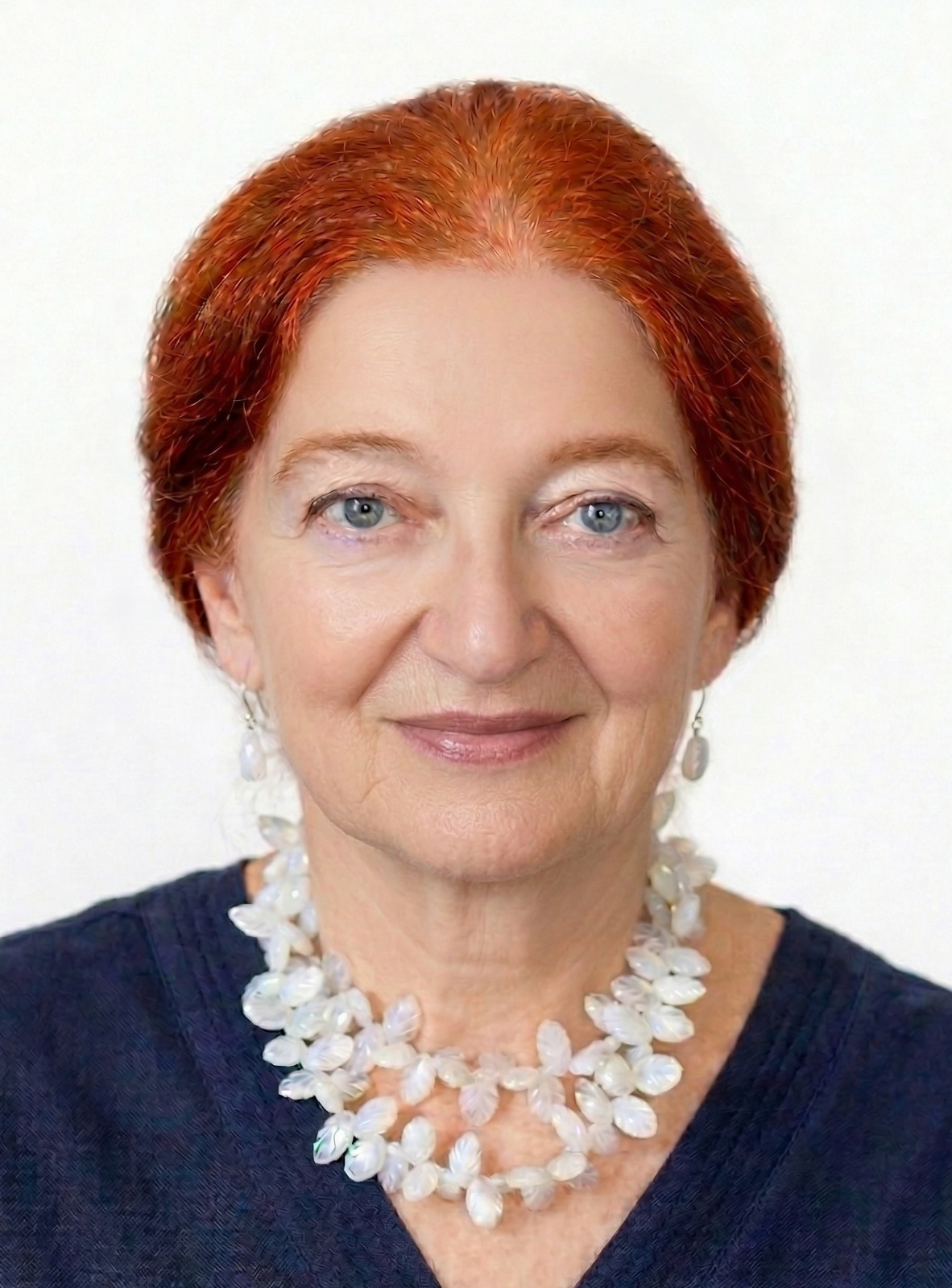
 My name is Donca Vianu. I was born into a world in which a totalitarian ideology beat the drum for all aspects of life: which books to read, which music to listen to, whom to applaud, whom to thank, whom to befriend and whom to hate, where to live and where to work — decided by the communist party bureaucrat — where to travel (only inside Romania), how to make love — without any means to prevent pregnancy — what to think and what to feel. The ideology was defined as promoting the highest values — universal justice, equality and equity. In daily life their opposites applied: lies, bribery, hypocrisy, corruption, scarcity, arbitrariness, lack of agency, surveillance, punishments, denunciations, arrests, terror. It made me grow special antennae to detect, at an early stage, every form of political manipulation. Escaping totalitarian Romania under Ceaușescu was the first big gift life gave me. It gave me a life.
What followed were hierarchical Western Germany, then the liberal democracy of the Netherlands, then India and its living spiritual tradition, and lately the pristine nature of a national park in Portugal. And a strong connection to Brazil, and only five weeks — yet as revelatory as a year — in South Africa, among rescued lions and tigers.
More than forty years of practising psychiatry and psychotherapy across cultures, with patients sitting in front of me, each one asking, from their different cultural armamentarium, the same questions every human being eventually asks.
I am a psychiatrist by training, and I have spent my career in psychiatric clinics and institutes for mental health alongside a private practice of my own. But alongside medicine, for as long as I can remember, two other loves have run beside it: art, and the pursuit of what lies beneath ordinary consciousness.
The clinical side of my training is wide. I trained in Rogerian and Gestalt psychotherapy, in Hypnotherapy, in the treatment of PTSD, in Cognitive Behavioural Therapy, in Imagery techniques, and more.
My earliest formal training in hypnotherapy came in 1987 — a three-year course offered by the Dutch Association of Psychiatrists, a rigorous clinical formation that has remained, more than three decades later, the foundation beneath everything I now do with non-ordinary states of consciousness. Complex PTSD has long been a particular area of my clinical expertise, and it was this same foundation that let me, much later, in 2018 and 2019, extend my practice specifically into Regression to Previous Lives, training with Paul Aurand, MHt, in New York.
The spiritual side of my life has been just as committed. I studied Buddhist psychology directly with Thich Nhat Hanh, Zen master, poet, and peace activist, for six years. A three-year course with Annette van den Berg, at the School for Effective Intuition, opened the Vedic science of the chakras to me. I went on to study the Sacred Feminine with the philosopher Paule Salomon, and from there into Shaktism — the Tantric science of the ten cosmic powers, the Mahāvidyās. In 2017 I encountered shamanism, and learned to work with the Medicine Wheel under Daan van Kampenhout, a shaman trained by Lakota and Sami teachers.
And there has always been art. Two years of theatre training with Luc de Smet, founder of De Kleine Académie in Brussels. Dance with Naomi Duveen at the School for New Dance Development in Amsterdam. Painting with Han ter Keurs and Frits van Tiel. A course on Creativity, Change and Innovation at the Open University in the UK, which I later turned into workshops of my own on the fundamentals of creativity.
None of this, looking back, was really separate. The clinical training taught me how to sit with human suffering and how to navgate severe mental crisis. The spiritual training taught me that the crisis is very often larger than the single life it appears to be confined to. And the artistic training taught me that some things — the inner light Jacques Lusseyran found behind his blindness, the bliss I recognised in Jodorowsky's work, the silent understanding that passed between myself and the white lion Neptune one evening in South Africa — cannot be reached by clinical method alone, and need a different kind of attention to be perceived at all.
What I have built, across these forty years, is not several separate practices loosely connected by my own biography. It is one practice, with many doorways, all moving toward the same recovery: of the self beneath inherited conditioning, of peace in the face of mortality, of the soul's continuity across more than one lifetime, of one's place in the larger order of things, and of what is glimpsed, sometimes, in states of consciousness the ordinary mind has no access to. I call it, simply, A Practice for Wholeness — because that is what every doorway, in the end, opens onto.
I live now with my husband, Sanjay Gupta, MD, an eye and orbit surgeon from New Delhi, also trained in Ayurveda, Hatha Yoga and Chinese Traditional Medicine, in the middle of a natural park in Portugal, where I work with people from around the world, mostly online.
I am fluent in English, Dutch, German, French, Romanian.